directed by ari aster
palmstar media
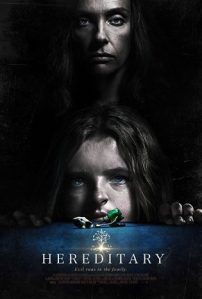 Another first-time feature director, Aster turns in an assured, forceful debut with this atmospheric creepshow. The pace is measured and the plot unfolds slowly, along the way doling out seemingly offhand tidbits that to this viewer were frankly hilarious at times. (It is hard to say whether any humor was intended.) The story keeps one’s attention, though for the first half or so that is often a byproduct of the fact that it is difficult to suss out precisely what is afoot. Once the second half gets going, it’s more compulsive. A set piece here or there dips into the tried-and-true, flirting with trite, but such engagement mainly serves to reinforce a vague feeling of nostalgia – although it is also true that on occasion a nagging sense of déjà vu may prevail. Never too viscerally frightening, what the proceedings suggest will linger long enough to give one a pretty good case of the heebie-jeebies … as long as certain plot points aren’t given too much thought, of course. Often redolent of a David Lynch film.
why did i watch this movie?
My brother asked me if I’d seen it, so I decided I oughta.
should you watch this movie?
While I’m not sure I agree with the raft of assessments that seem to behold this picture as an utterly terrifying modern horror classic, it’s definitely above-average.
highlight and low point
As has been observed in multiple locations, Toni Collette in the lead role is spectacularly mental, hinted at by affectations and mannerisms and illustrated by torrential revelatory outpourings. These welters of information give the film its dramatic propulsion. Gabriel Byrne, on the other hand, is a cipher as her husband, possibly to prefigure certain thematic elements but playing more as an underacted, nonessential role. The aha moment is underwhelming, having been somewhat telegraphed and bearing the tinge of the overly familiar.
 The second feature from director Keating following 2013’s Ritual, this science-fiction hybrid feels like a more fully realized affair. Though it seems to borrow heavily from various sources, it’s as homage rather than imitation – albeit as noted, the ultimate effect is somewhat to resemble The X-Files. Getting all the way to that point, however, is more than half the fun here, as the story’s slow buildup focuses on some familial dynamics, and only in exploiting the well-meaning dismissiveness exhibited toward one sibling by his brother and sister are the realities of their situation revealed. One thing this watcher found exemplary – which other reviewers seem to think a major drawback – is the novel approach taken to fleshing out the details behind the discoveries: None. No explanation is given, no tidy synopsis offered; it’s up to the audience. Personally, I thought this gambit worked perfectly, given the subject matter. The denouement unspools in stages, some of which are surprising (not SHOCKING) and some of which are business as usual. (The makers of Antibirth must have been taking notes, however.)
  Oh hey look, it’s an anthology film! You love those! The hook here is that all four segments are by female directors, and mainly are written by them as well. (The first is based on a story by our old pal Jack Ketchum.) If you are a familiar of the horror anthology film and have seen any of the roughly 2,000 or so that have been churned out over the past handful of years, you no doubt are well aware they are governed strictly by the law of diminishing returns. This one is no different. Of the four chapters, one is effective if burdened by a creaky concept (“The Box”); one is ridiculously derivative of stories in several other anthologies I can think of without much difficulty (“Don’t Fall”); another also sadly lacks in originality and calls to mind analogues in recent compilation films (“Her Only Living Son”); and one is pretty amusing if somewhat predictable (“The Birthday Party”). Each portion is introduced by
  SPACE RATS From Outer Space