directed by abel ferrara
navaron films
 Abel Ferrara’s non-pornographic feature-length directorial debut, in which he also stars under a pseudonym as the main character, a struggling-artist type in the Big City. With two female roommates – one of whom is apparently married and affluent, the other of which is, like, spaced out, man. (The roommates have a shower scene, because it’s very important to the plot.) Of the plot, it must be said, there is one: Reno, the artist, is working on a painting he hopes to sell to the gay art dealer he dislikes but nonetheless depends on, because Reno has no money. Meanwhile, a band called Roosters moves into his same tenement building and practices their discordant off-key blues-influenced new wave at all hours. Naturally, he starts killing derelicts with a power drill. Then things start to go awry. The best parts of this movie are the Roosters, whose music is chaotic and senseless and not “good,” and the utter zeal with which the drill killings are performed. Abel Ferrara: we need filmmakers like him.
why did i watch this movie?
I actually started watching this movie because I wasn’t sure if I’d already seen it. Was I confusing it with The Toolbox Murders? Maybe.
should you watch this movie?
Personally, I always find it instructive to watch slice-of-life features set in New York City in the 1970s. The gritty realism permeates the glamorous façade.
highlight and low point
A compelling scene involving the three roommates and a pizza pie foreshadows a lot of the movie’s falling action, much as it clarifies the nature of their relationships. (I may be bullshitting you, true, but I did find it fascinating.) Some of the character development stereotypes or is otherwise less than charitable.
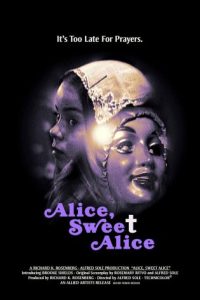 This is a weird one, the kind of movie they really don’t make anymore. Kind of an American giallo, it also pays homage in a way to Don’t Look Back by Nicolas Roeg, complete with the signature rain slicker. (I have never seen Don’t Look Back, but am well aware of its tropes.) A familial study in more than one way – WHAT is her sister’s problem? WHERE is daddy? – the fun really begins when Brooke Shields is murdered during her First Holy Communion (oh, all right, the character she plays is). So what’s up with that priest, anyway? The SHOCKING reveal in this one mostly works, especially because at least one important ambiguity remains unexplained; also, some of the criminal acts in the film seem to arise mainly from malevolence or ill nature, not particularly to further serve the plot. There’s even a John Waters aspect to parts of this feature. Creepy and effective.
 Purportedly a “horror comedy,” this offering could’ve used more of either, or both. Readymade for the bygone era of the “prize movie” – or Elvira, Mistress of the Night – Nightmare mostly plays it low-key, and is made with enough panache to avoid becoming fodder for MST3K types (or RiffTrax, if we wanna be up-to-date). The major problem it has is it doesn’t offer enough scares OR laughs for either aspect to become clear; it is also held back by its limited scope. The premise – famous vampire actor is marquee guest at horror convention, and actual vampire – probably works better if expanded beyond a focus on the same small set of characters. It may have been more effective in its own era, albeit merely with cult appeal – and turns out the writer/director, John Stanley, hosted a late-nite television program called Creature Features for eight years. Well, whaddya know.
 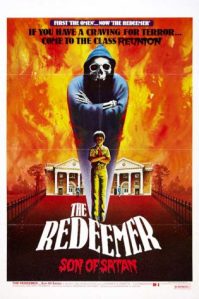 If you try, you can find the claim that this chunk of tripe was a precursor to the slasher craze or some such nonsense. What it IS is a convoluted bit of inanity that doesn’t make much sense and doesn’t really bother to try.
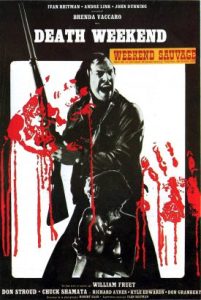 One of them ol’ rape-revenge flicks, this Canadian turkey produced by Ivan Reitman boasts a rape scene that I wasn’t even convinced had happened, so effectively was it portrayed. Almost every character in this exercise in pointlessness is extremely annoying, ranging from the drunken hicks through the egocentric urbanite to the loutish, subnormal thugs. Seemingly random events meander on and on until the interminable harassment scene begins, and it’s all formulaic. The justifiable homicides, once they eventually start, more or less come out of nowhere, which is a nice touch, and some are fairly creative as well. Overall, however, if you actually for some reason watch this garbage, you’ll wonder why they bothered making it. Or if they knew.
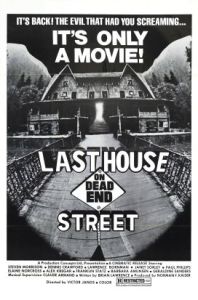 This early faux snuff film (initially screened under different titles in 1973 and 1975) is a chore to sit through, honestly, mostly due to the dialogue and the “experimental” camera usage. The story of a ne’er-do-well jailbird who decides to become an auteur filmmaker, and to utilize, uh, excessive realism – either to show up pretension in the movie world or just because people are jerks and deserve it, man – Last House boasts recurring scenes as well as at least one scene that goes on for way too long. Even for a fairly short film, elements of this one drag. The lead actor/director’s performance is eerily reminiscent of Meat Loaf’s as “Eddie” in The Rocky Horror Picture Show, however, and if people still use “samples” in their music or multimedia, one of his repetitious rants would make a great one.
 SPACE RATS From Outer Space