directed by brian owens
pavlina ltd.
 The main thing I noticed in this peculiar low-budget pic is that almost all of the actors portraying college students are way too old; along with that factor comes the clumsy nature of the dialogue, somewhat common to B-movies trying to portray “realistic” campus life. Also evident is the off-brand quality of this production. Though a reasonable facsimile of a film a major studio may have made, the differences are definitely noticeable in set design and wardrobe, to name but a few departments. (Several of the performers also appear to be cut-rate imitations of Name Actors.) The coherence of the story – which is otherwise off-the-shelf tomfoolery – is similarly lacking, perhaps because it seems to be missing details that might have shed some light on various characters’ motivations. It is entirely possible I am putting too much thought into my analysis of this tale about some kinda demonic ritual pact. Oh, and the SHOCKING ending isn’t, of course.
why did i watch this movie?
It certainly looked lurid enough, but I was expecting it to be gorier, or scarier, and a little more fully realized.
should you watch this movie?
The version I watched began with what came across as a retro-style trailer for itself, and if you can locate that promotional clip, your viewing need go no further.
highlight and low point
The producers either were unconcerned about the shoddiness permeating various parts of their creation, or unwilling to shell out for any upgrades, and the results are at times remarkable. A reasonably terrifying movie could have been assembled from the raw material here, but it … wasn’t. A few too many shortcomings.
 Abel Ferrara’s non-pornographic feature-length directorial debut, in which he also stars under a pseudonym as the main character, a struggling-artist type in the Big City. With two female roommates – one of whom is apparently married and affluent, the other of which is, like, spaced out, man. (The roommates have a shower scene, because it’s very important to the plot.) Of the plot, it must be said, there is one: Reno, the artist, is working on a painting he hopes to sell to the gay art dealer he dislikes but nonetheless depends on, because Reno has no money. Meanwhile, a band called Roosters moves into his same tenement building and practices their discordant off-key blues-influenced new wave at all hours. Naturally, he starts killing derelicts with a power drill. Then things start to go awry. The best parts of this movie are the Roosters, whose music is chaotic and senseless and not “good,” and the utter zeal with which the drill killings are performed. Abel Ferrara: we need filmmakers like him.
 Wow, where to begin with this slice of cinematic … excellence. First off, it really comes across like an excessively long (and gory) episode of Police Squad! Lousy acting, ridiculous story, unbelievable characters … Pieces has got it all, and then some. (From Wikipedia, as written: “The film has retained a cult following however among bad movie fans on account of its numerous logical absurdities, gaffes, unlikely dialogue and ridiculous moments.”) From the opening scene on, nary a credible moment can be found. What is most difficult to believe, given the script and the circumstances of the production, is that the cast seems to be playing it completely straight. The apogee for this viewer is the “championship” tennis match between two women who play as though they had never held rackets before – which turns out not to be far from the truth. The SHOCKING postscript appended makes absolutely no sense whatsoever, but it sure should’ve led to an even more implausible sequel, with the added bonus of potentially being in an entirely different realm of horror. A sadly missed opportunity, in my opinion.
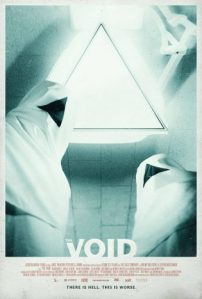 The trailer for this movie made it look SO good that little likelihood existed for it to live up to the promise, but with that being said, The Void was still well above average. A look at one man’s experimental approach to an afterlife, wrapped in a siege flick, it disappointed me a bit in that at a certain point the threat of zombie archetypes loomed. That fate was avoided, and its metaphysical mumbo-jumbo also saved it to a degree. Certainly a suspenseful movie, I must detract a few points for evoking reminiscences of Jacob’s Ladder, and also for reminding me a bit too much of the Thomas Tessier novel Finishing Touches. It is, however, entirely possible it purposely provoked such meditations.
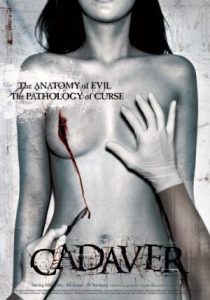 The last couple Asian horror pictures I’d tried to watch I never finished, as the Japanese one (I do not recall the title) was just too confusing and the Korean one (The Second Coming) was too low-budget for its rather standard haunting-ghost malarkey, but I decided to try this South Korean production because the premise seemed straightforward enough given the genre conventions. That premise? Medical students have to dissect a mysteriously marked female corpse, and suffer the consequences. OR DO THEY. The Cut is mostly worth the effort, though it was not as creepy or frightening or mysterious (or confusing, or repugnant) as the best of the style. Mainly it reminded me why I have enjoyed other movies of its ilk, and that I still may. Perhaps a tad mainstream in execution overall.
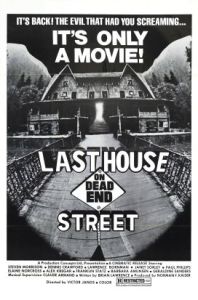 This early faux snuff film (initially screened under different titles in 1973 and 1975) is a chore to sit through, honestly, mostly due to the dialogue and the “experimental” camera usage. The story of a ne’er-do-well jailbird who decides to become an auteur filmmaker, and to utilize, uh, excessive realism – either to show up pretension in the movie world or just because people are jerks and deserve it, man – Last House boasts recurring scenes as well as at least one scene that goes on for way too long. Even for a fairly short film, elements of this one drag. The lead actor/director’s performance is eerily reminiscent of Meat Loaf’s as “Eddie” in The Rocky Horror Picture Show, however, and if people still use “samples” in their music or multimedia, one of his repetitious rants would make a great one.
 SPACE RATS From Outer Space