directed by david bruckner
entertainment one features/the imaginarium
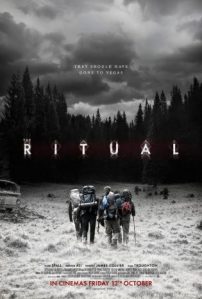 I suppose I can understand the urge some filmmakers get to adapt scary novels into (allegedly) scary movies. But since this compulsion has failed so many times and produced so many risible examples of lousy cinema, it becomes a lot more difficult to understand why some choose the projects they do. Such as, oh, I don’t know, The Ritual. Adapted from a taut, tension-filled book by Adam Nevill that describes a series of psychological ordeals, onscreen this Norse saga becomes a generic monster movie stuffed full of timeworn gestures and set pieces. (And filmed not in Scandinavia but Romania, which amuses me no end.) Often too rushed to develop any of its themes enough to produce any impact, details from the source text are tweaked, omitted or altered with varying degrees of success. A puzzling recurring theme that is wholly the movie’s invention is an error, however, and although the second movement of Nevill’s story isn’t any great shakes, what it becomes on film is not only completely different but far less useful or comprehensible, its intended climactic finale instead ridiculous and nonsensical. Perhaps I shouldn’t have read the novel first.
why did i watch this movie?
It’s my brother’s fault (no, not that one, the other one).
should you watch this movie?
Read the book instead.
Highlight and low point
I usually find the “characters bonding in difficult circumstances” motif enjoyable, even though here I thought it suffered from pacing or abridgment. I guess the cinematography was pretty good. Rafe Spall’s acting in the lead role didn’t do it for me, however, and the silly attempt at a terrifying pagan-god-beast thing … no. Get that weak stuff outta here.
 All right, now this is more like it. This flick is completely nuts, sort of a lower-budget X Files set in the rural hinterlands, homemade recreational drug territory. Featuring flashbacks, hallucinations, drugs real and invented, the military, prostitution, mutations, questionable pregnancies, abductions, untrustworthy acquaintances, bad decisions, shady characters and probably some other stuff, the plot takes a loooong time to gain any coherence, and when Meg Tilly’s loonybin character shows up to try to clue in our protagonist, naturally she is disbelieved. The film justifies itself after a fashion, in what is not a sympathetic manner but is definitely a memorable one. Truth be told, Antibirth is kind of a mess and could have helped itself by cleaning up a few discursions or extraneous characters. Overall, however, it manages to be both funny and nauseating, and is generally well-written and acted, usually avoiding cliché despite itself. Its surrealism probably aids it in that regard.
 The first time I tried to watch this film, I stopped after about 10 minutes, as it started off with what at the time seemed to be a hokey attempt at a period setting, in this case early 1600s New England. I kept seeing rave reviews for it, however, so I gave it another go. Turns out it was nothing that I had expected. Sure, it’s got the rustic isolation and the religious underpinning, but it focuses almost entirely on just one family, alone at the edge of the woods. Things proceed slowly for a while, with only some parent-child tension and sibling rivalries raising suspicion, but once the action begins, I had to hang on to my hat, figuratively speaking. Still, for most of the picture, it’s a fairly standard affair – so much so that before the final act or so begins, I was preparing to write it off entirely. That final act, however, earns the proceedings a different perspective by taking things to an unforeseen level. (One detail in particular surprised me.) Not perfect, and in places banal, but not bad at all for the first-time director.
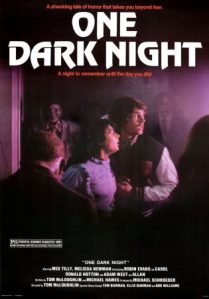 While it technically may be true that I’ve never personally been assaulted after hours in a mausoleum by psychokinetically controlled corpses , I think I safely can say that it wouldn’t seem as threatening in person as it does to several of the characters in this ’80s trumpery. The reason I state this with such confidence is that the dead (which appear to be wax dummies) are not reactivated or anything, they’re just being propelled slowly across the floor. That they apparently somehow manage to kill two people – by, uh, falling on them? – is a special bonus. The preposterous tale of a proponent of “psychic vampirism” experimenting in the manipulation of “bio-energy – the electromagnetic force in all living things,” this picture would be a complete failure if it weren’t so utterly absurd. As it is, it’s passable as kitsch … barely. The presence of Adam West helps in that regard, as does the fact that the dramatis personae largely are supposed to be portraying high-school students, which is patently ridiculous.
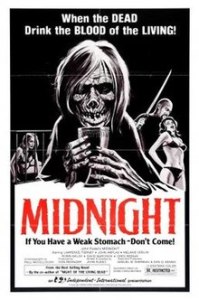 This delight’s got a little bit of everything. It’s got a weird Satanist family cult, it’s got a teenage runaway from Troubles At Home, it’s got Lawrence Tierney, it’s got a road-trip film contained within it, it’s of a visual quality usually associated with home movies from the dawn of time, and it’s got a fabulous theme song that is completely out of place in its grim milieu and sounds as though it’s from the wrong decade besides. Midnight is also strangely paced and edited, and could be a Christian message movie in disguise. Let’s see, what else … travel montages, black characters that seem as misplaced as the title song, a blatant ripoff of Psycho, and an extremely abrupt and unlikely ending involving rescue, redemption and revenge. Oh, and more of the rebarbative laughter à la the goons from Death Weekend. All told, an entertaining exploitation picture – and based on a novel! Which I cannot WAIT to read. The auteur was a colleague of George Romero.
 Whee! Hee hee! Yee-haw! This giddy space-station extravaganza is an FX-rich disaster film that shamelessly reminds one of numerous other similarly themed flicks (and actually is reminding this guy of 2011’s Apollo 18 right now as he’s thinking about it). You know the drill:
 When the novel upon which this film is based was first published, I was in one of my periodic phases where I was not interested in reading any more goddamn Stephen King novels, besides which I thought it sounded pretty stupid, given that it seemed a little late to be ruminating on mobile phones. (And paradoxically proved to have been early enough to make a more prescient statement than it did!) Then a similarly King-obsessed friend managed to goad me into catching up on his more recent works – Under the Dome and Duma Key, in case you’re wondering – and I was screwed. Cell the novel is not of the more admirable S. King, and neither is this adaptation worthwhile, despite – or because of – the author’s work on the screenplay. John Cusack takes the lead role, Sam Jackson shows up for a paycheck, and the ending is completely different from the book’s, and appalling. It’s also one of the movie’s only effective scenes, and made me wonder yet again why the best-selling author seemingly doesn’t have an editor. Or at least one who can talk him out of his poorer ideas.
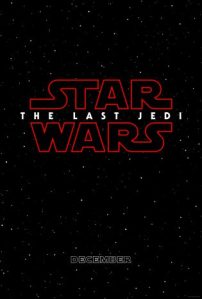 While technically not a horror movie, the moaning and wailing that greeted Episode VIII from its bereaved fanboys (and -girls) could have convinced one otherwise. Which, okay, I can dig where they’re coming from, as this installment plays for laughs more often than one might expect, obscures the franchise’s hoary catchphrase, and – heaven forfend! – introduces
 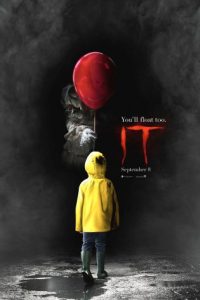 I … have read over 60 Stephen King books – which is to say, most of them. IT is one of my favorites, so I am perhaps biased in my abjuration of this werewolf picture. But what makes the book work is the relationships of the “Losers’ Club” kids – with each other, and with the adult world – and we get almost no sense of that in this retelling. Instead, we’ve got a bunch of kids who decide to hang out together for some reason and, moreover, to confront the hideous monster killing children in their town. Their enemies, meanwhile, are even less well-drawn, so further impetus for much of the action is lost. The climactic scenes inside the monster’s lair are well-envisioned, and a few of the individual vignettes are effective. But the best scene was spoiled by being included in the trailer, and I feel like a sucker for having bought into it. I’m still gonna see Part II, of course.
 Confession time: It will in no way be possible for me to describe in mere words this incredible movie, and trust me, when I say “incredible,” I mean it. What we have here is one of the most completely batshit cinematic wonders ever concocted. Just about every time I was convinced nothing could top what I had just seen, well, you can probably guess where I’m going with this. How even to begin … Loath as I am to provide spoilers in these reviews (or indeed, as you may have noticed, much relevant information at all), let me relate to you this movie’s plot. A cruise ship is rammed by an unmanned Nazi vessel that pilots itself and is apparently sentient. It’s also bloodthirsty. No, really, the ship needs blood. We know this because after former cruise ship captain George Kennedy is taken over by the evil spirit of Death Ship, he informs his would-be successor Richard Crenna, when revealing his/its plans to kill said would-be successor and his family. (This is ¾ of the way through; almost everyone else who survived the initial calamitous event has already been bumped off by D. S.) Luckily for me, I was watching a version of this insanity that was helpfully subtitled, so as to highlight the ace dialogue, and treating me to captions such as [almighty crash], [explosion], and my personal favorite, [faint sounds of torture and suffering]. Although assuredly unintentional, this film is nonetheless a laugh riot.
 SPACE RATS From Outer Space