directed by stuart gordon
empire pictures
 “H.P. Lovecraft’s Re-Animator,” the title card proudly boasts, and yes, it IS set at Miskatonic University, so it’s got that covered. Now, have I READ Mr. Lovecraft’s story of the same name? I do not think I have, despite the many times I’ve dipped into his oeuvre to while away some bleak hours enmeshed in his obfuscatory, eldritch and often oddly vague universe. This is a highly professional production, and the assured direction feels like kind of a blessing given what are often the limitations of these genre offerings. Absurdist at times, possibly to leaven the effects of its abundant grotesquerie, this picture nonetheless manages to disquiet, with Jeffrey Combs deserving much of the credit for his effective portrayal of an appropriately deranged Lovecraftian scientist. Although often rampantly silly, this is also undoubtedly a film that understands that horror doesn’t necessarily need to be laden with shocks and starts. It’s definitely not for the squeamish, though, as medical practicum and biological experimentation share screen time with copious bloodletting.
why did i watch this movie?
It’s no. six on Johnny Ramone’s top-10 list, and kind of a must-see in the annals of comedic humor.
should you watch this movie?
While I’m not sure I’d call it “timeless,” this flick still achieves everything it tries – and serves as perhaps the model for its particular brand of deranged horror-comedy, with some of its notes echoed a few short years later by Evil Dead 2, for one.
highlight and low point
The FX are pretty spectacular in this picture, really, especially given how outré some of the concepts are. (I’m thinking of the whole “head in a lab tray” sequence here.) Also, it’s impressive that no matter how ridiculous things get, no one ever really acknowledges that fact.
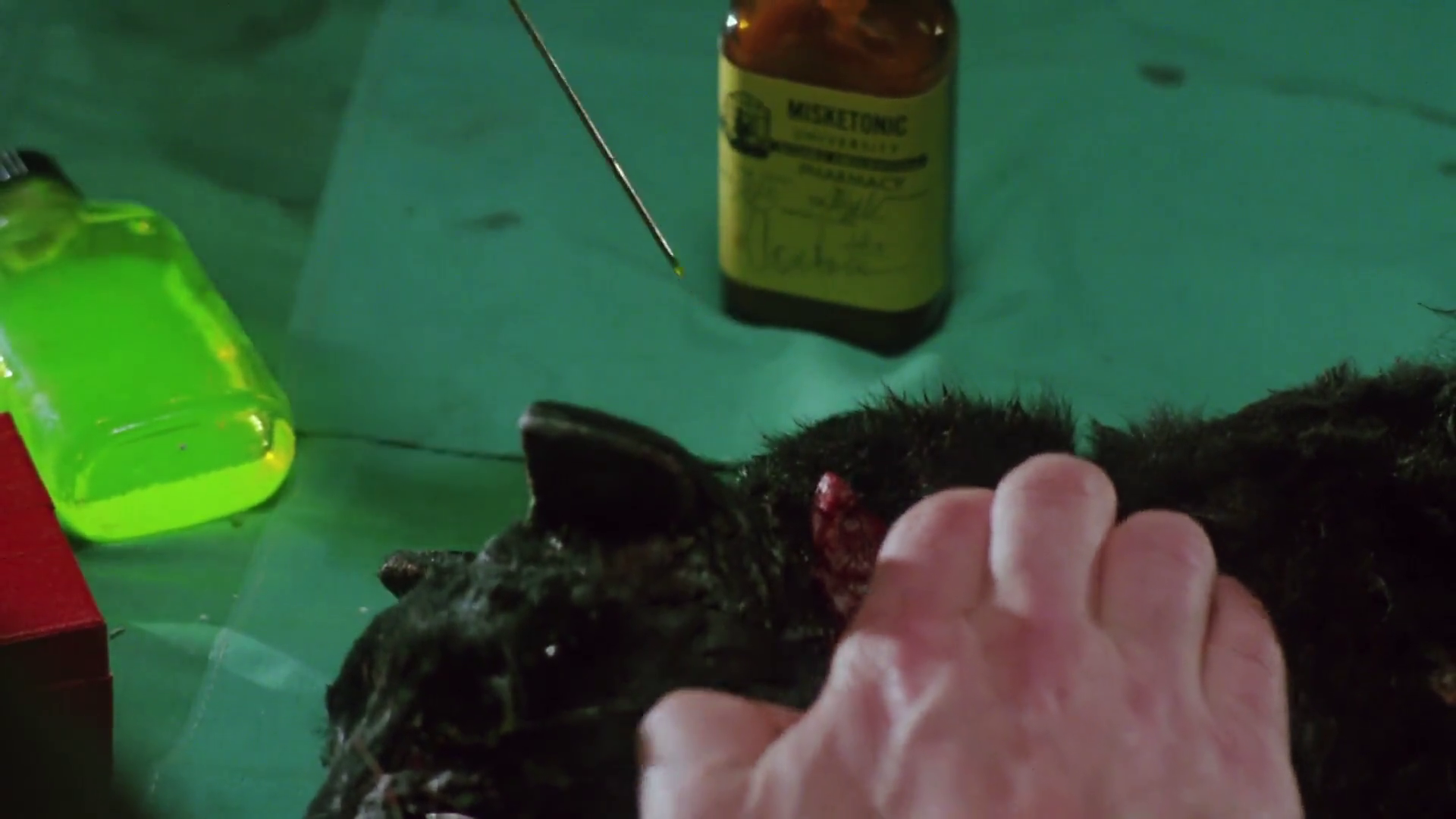
note misspelled label behind dead cat




 So many titles and so many threatening adverts for such a tepid plod whose only semblance of tension arises from the wait for occasional actress and future lad-mag model Andrea Allan to disrobe. Who’s the killer, you might wonder for an idle minute, correctly identifying the obvious attempts at misdirection, and also realizing that you don’t much care so long as you’re assured the picture will be ending. When it does reach that ending, full dark night abruptly shifts to very bright daytime. Clearly, the filmmakers wanted to get it over with, too. Perhaps this is why they don’t bother tying up any loose ends … such as letting us in on why our heroine got
 involved
  The second murder scene is pretty intense, I suppose, but by that point it isn’t even interesting enough to sustain one’s attention. Some of the leftover mod touches of a foundering Swinging London are amusing. A tangential subplot involving pigeons goes absolutely nowhere. Yes, pigeons.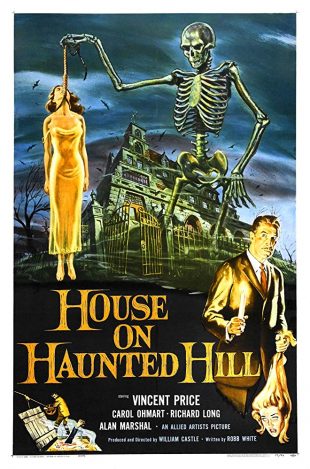


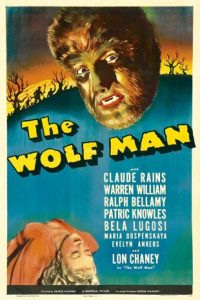 Not only is this movie not frightening in the least, this reviewer has no idea how or why it has been lauded through the decades as even a competent endeavor, much less an estimable one. Did I say “not frightening”? It’s completely ridiculous, helped in no way by the laughable attempt at dramatics presented by Lon Chaney, Jr. Let me emphasize the generational suffix; this is not the lauded “Man of a Thousand Faces,” it’s his son, who benefits from this picture’s dime-store makeup disguising his general inability to act naturally. Also not helping: the entire film is very obviously shot on the studio lot. Additionally, it’s dismaying to be treated to no shots of Larry Talbot’s transformations. (Those scenes take place in the various sequels.) A “B” picture through and through, presented such that even the underlying existential crisis isn’t at all provocative.

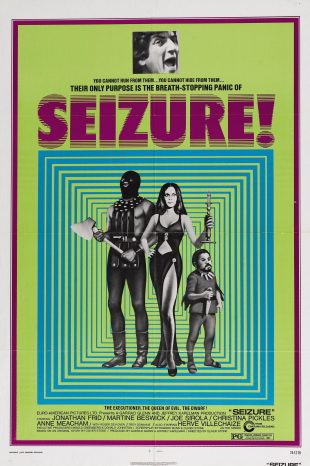
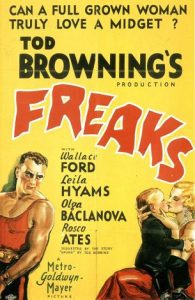 Disjointed as hell due to excessive editing undertaken in a doomed effort to make a disturbing revenge picture even somewhat palatable to a viewing public it never found, this disastrous flop remains one of Hollywood’s most ill-advised creations – for any number of reasons, not limited to how it may make its audience feel. One can only imagine how appalling the excised material must have been, and marvel as to the effect it could have added to a production that remains troubling after nearly a century. The decision to cast real circus sideshow performers was perhaps an inevitability, but the majority of them aren’t film actors and can’t much pretend to be. Saddest, though, is probably the loss of the chance to really experience the capacity for a full range of emotional responses from these morbidly maligned people, as only glimpses remain. As it is, 60-odd minutes doesn’t give anything of real resonance a real chance to coalesce, and what we’re left with often plays like a soap opera interspersed with sitcom skits. How this one ever got the green light remains a question to ponder.
 SPACE RATS From Outer Space