directed by roger vadim
documento film/films ege
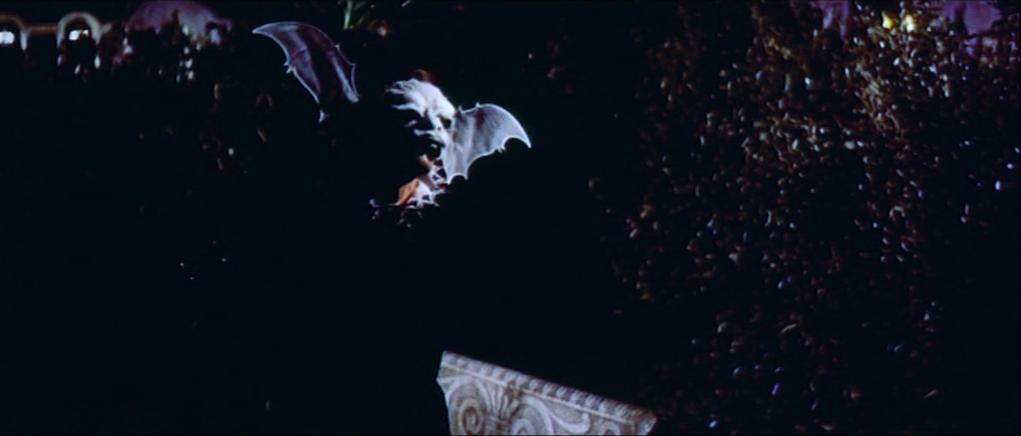
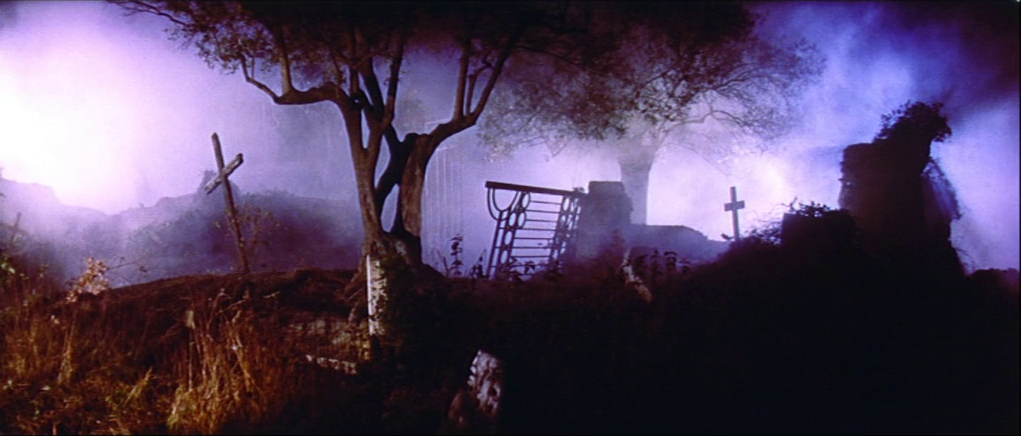
 Let’s be honest here, this is a fairly half-hearted rendition of the “Carmilla” saga, with an added wrinkle or two that don’t do much to improve the tale being told – but also with a brisk, at times nearly impatient pacing that obscures or confuses other details. And after poncing its way through a mock-Victorian costume drama’s story arc, it abruptly veers into what I can only guess is an approximation of German Expressionist cinema for a truly bewildering and bemusing effect. Then the army blows up a castle and we’re teased with a silly coda that doesn’t bother to honestly follow the plot points. Even the sensuality expected from notorious Svengali wannabe Vadim is stilted. It doesn’t wear out its welcome, clocking in around a brief hour and a quarter, so there’s that.
why did i watch this movie?
Let’s be honest here – it’s because of this:
(Just four guys from somewheres in New Jersey.)
As an aside, the movie industry through various guises sure has churned out a massive clutch of vampire pictures. I sorta wanna trace the development thereof, but on the other hand …
Should you watch this movie?
A lot of other options exist if it’s the source material that interests you.
highlight and low point
The sequence during which Carmilla prefers to get drunk and listen to beat music instead of getting ready to attend the preposterous masquerade ball heralding her “cousin” Leopoldo’s upcoming nuptials is unexpectedly amusing. And of course the bizarre detour into artiness (if not artifice) will make you sit up and take notice. Even then, however, the production fails to capitalize fully on its own mythology. Some minor characters flesh out the running time without adding anything to the storyline.


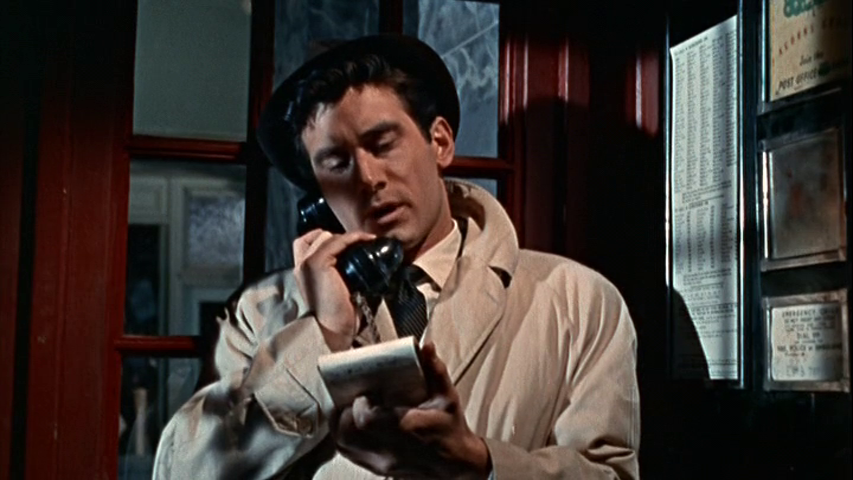








 I’m sure it’s been noted before, but the attention to detail in this movie astounded me, such as the scene wherein Arbogast is looking for clues to Marion’s disappearance in the Bates Motel’s office parlor – where Norman is displaying his stuffed birds – and the bookshelf behind him holds a full set of books entitled The Art of Taxidermy. So it’s a bit surprising, I guess, that certain other important factors seem so transparent, or even dishonest. Of course, that’s nitpicking, and anyone who doesn’t think this is a high-quality cinematic achievement … probably doesn’t care for noir films or suspense, or pulp fiction. Hitchcock himself must have thought he had a goldmine here, however, as he went ahead and made it despite Paramount’s objections and refusal to budget it appropriately. That worked out all right.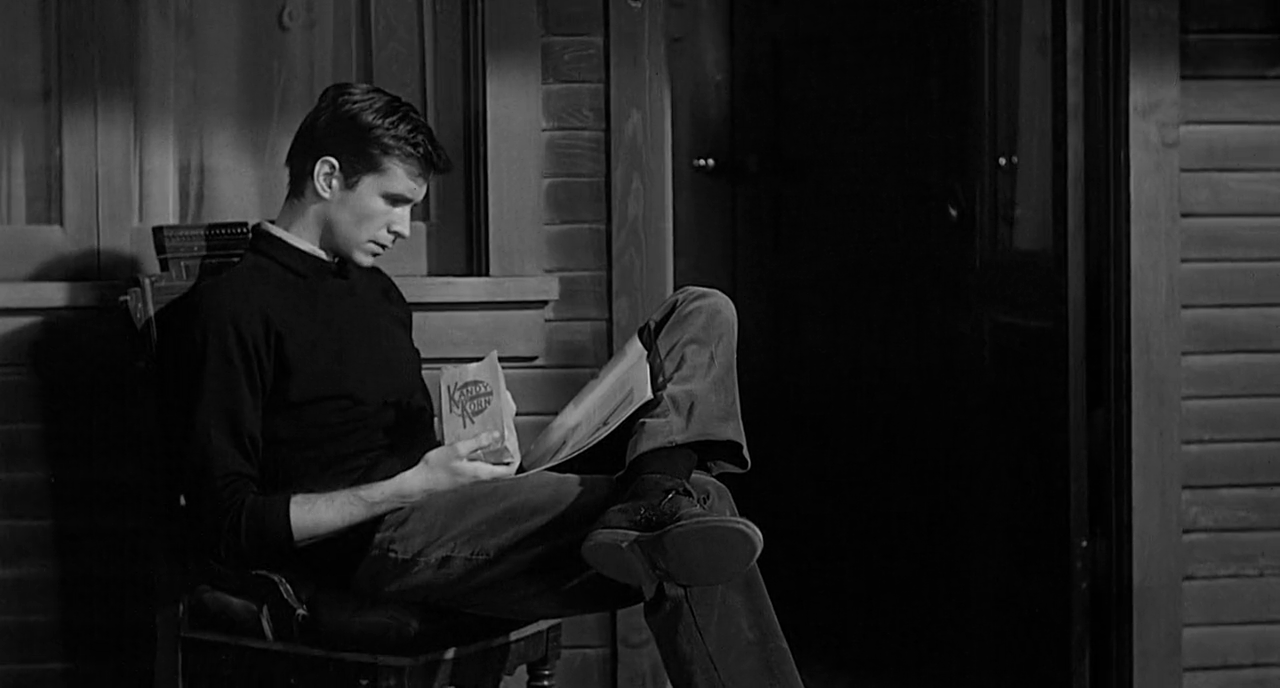
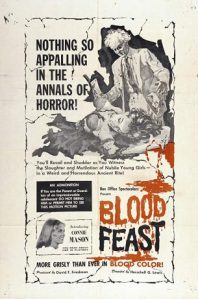 Here is where we should begin our disquisition on the ephemeral nature of what constitutes art vis-à-vis garbage, and engage in deep contemplation on the revealed substance and its relation to the Ideal, and how mere imitation or re-creation can only hope to further distance us from the knowledge of this state of perfection. We should, but we won’t, because gore impresario, auteur loon and marketing maven Herschell Gordon Lewis would probably laugh and point at us. His frankly ridiculous tale of catering a Society party with an “authentic Egyptian Feast” as a hopeful means of reviving the goddess Ishtar via cannibalism features some impossibly wooden acting, hilariously half-assed set dressing, excessively expository dialogue, indubitably fake blood, transparently ersatz makeup and FX, rudimentary cinematography, et cetera et cetera et cetera et cetera. (And in the midst of life we are in debt,
 SPACE RATS From Outer Space