directed by bob clark
Quadrant films/impact films
 The first thing I noticed about this movie, the sophomore effort from Bob Clark following Children Shouldn’t Play With Dead Things, is how vastly improved in every aspect of filmmaking it is in comparison to that initial offering. Script, lighting, camerawork, acting, pacing, makeup effects – everything is better. It’s as though Clark and head writer Alan Ormsby made a serious study of their inaugural production in order to make a more professional showing with their next film. Whatever the explanation – the budget was almost 400% larger, nearly $240,000! – it worked, because altogether this little horror picture is nearly excellent. The emotional impact of the small-town boy returning from a foreign war and the many repercussions of his impaired condition – to describe it as benignly as possible – are powerfully depicted, and the creeping sense that something is very wrong is deftly developed. Inspired by the W. W. Jacobs story “The Monkey’s Paw,” this saga sure seems to have been bastardized within S. King’s 1983 novel Pet Sematary in the tale of Timmy Baterman. (PERHAPS coincidentally, late in this flick, the action veers into a graveyard identified on its iron gates by a sign bearing the misspelling “Cemetary.”)
why did i watch this movie?
As mentioned when I reviewed Children, I had previously seen Clark’s third opus, Black Christmas, and I wanted to complete the trifecta.
should you watch this movie?
Yeah, I think any fairly serious horror fan probably should.
highlight and low point
Appraisals of the thespians amply cover both extremes. As the returning soldier “Andy,” Richard Backus does an overly intense Anthony Perkins impersonation, and as his mother, Lynn Carlin is often grating. John Marley as the father is absolutely perfect, however, and the various smaller roles are also done to a turn.
rating from outer space: A−
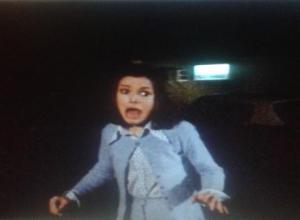
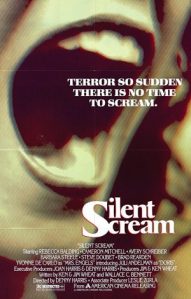 Set in a boarding house, this film is a pretty decent example of the derive-the-killer’s-identity plotline, the basic premise of which was repeated a few years later by
  When was the last time you saw a cinematic character killed by a rampaging elephant? Like, by strangling. Yeah, that’s what I thought. Wild Beasts is the kind of dubbed foreign flick that makes me wonder what the original dialogue was, although I’d be willing to bet not a whole lot of nuance is lost with translation yielding “She’s not crazy, she’s being chased by a cheetah!” and “What the hell is that! Elephants!” The production did a pretty good job with the scenes involving people being mauled by various wildlife, given obvious limitations. I’m glad I watched a murky VHS upload, however. That made the scenes featuring animal cruelty a bit easier to handle. The one in which a cat is ravaged by rats I could even believe was faked. Others, such as when lions and hyenas attack cattle and pigs inside a stockyard? No such luck. The film ends abruptly, without explaining how the zoo animals and a group of children – but apparently no one else – got dosed with PCP, despite wrapping up with a screenful of gibberish.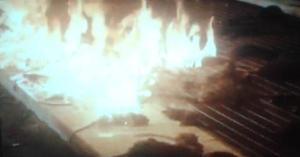
 Originally titled “Gnaw,” this indie flick had me wondering for much of its first hour or so if it was actually a parable about domestic violence. Whatever the case, the last 40-odd minutes took it into supernatural horror territory and were quite fraught with tension, although also quite evocative of The Babadook. That connection was only strengthened for this reviewer by its oddly casual, offbeat resolution, which interjects a cutesy element to the proceedings along with a tinge of humor. Indeed, after all the buildup, the way our heroine ultimately triumphs over the totemic manifestation of her adversities is completely anticlimactic – cleverly acknowledged onscreen by the character’s reaction. This production doesn’t seem quite sure how to blend its disparate elements; it also verges on clumsiness at times. Additionally, some of its generic characterizations seem little more than ciphers. Overall, though, I usually tend to champion efforts of this sort, which both show ambition and demonstrate a level of skill to match. A bit more deftness in future endeavors, and this director may really have something. A touch more originality wouldn’t hurt, either.
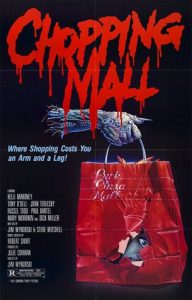 It’s a shame SPACE RATS has this capsule format, because the old me could’ve written thousands of words on the sociocultural implications of this classic. (The old me was a blast at parties.) That being said, it must be allowed that this is very nearly the perfect schlock horror creation. It’s a little too knowing, but it was produced by Julie Corman, husband of Roger, and if your producer’s last name is synonymous with the genre – having more or less invented it – that may be hard to avoid. To be clear, this isn’t really much of a “horror” picture, either, and the revamped title (it was initially called “Killbots” for theatrical release) is wildly misleading, as no “chopping” occurs. The rogue security robots, however, are a delightful mixture of Battlestar Galactica Cylons and the Stern Electronics arcade game Berzerk, and a clear precursor to elements soon to be seen in RoboCop as well. The acting is wooden at times, the dialogue obvious and stilted, the continuity questionable and the FX often hilarious, but when the day is saved by … explosive paint? Well, you’ve got a cult smash on your hands, and deservedly so.
  First off, this picture has the most swingin’ soundtrack you’re likely to hear for some time, vast amounts of fusion-era Miles Davis electrobop courtesy of composer Roberto Nicolosi. It also has pretty great examples of breathless, stentorian dubbing for the dialogue. (The title translates as “Eye in the Labyrinth,” if you’re wondering, but the version I watched didn’t bother with all that.) And I spent the early portion of the movie deciding to describe the heroine as “sylphlike,” before discovering at length that she’s not the heroine. Ergo, as is usual for a giallo, nothing much is coherent for most of this flick. Unusually for this type of film, however, eventually everything is explained, and even makes some sort of sense – at least in terms of the story being presented, that is, not in any identifiable reality. Unfortunately, it mostly translates into a mundane mystery. On occasion, it appears as though the cameraman (Giorgio Aureli? Maurizio Maggi?) loses control of his equipment.
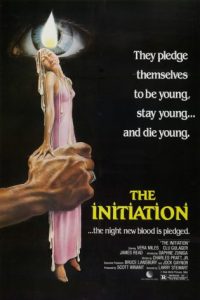 Let me say right up front, there’s no morgue or mausoleum in this picture, so I clearly had not paid careful enough attention during my film search. Thus prepared to be disappointed, I instead was pleasantly surprised by how much I enjoyed this slasher flick – especially as it wasn’t very promising at its onset. The sophomoric sorority subplot dissipates, however, and the family intrigue heightens, all while an amusingly amateurish sidebar screams out that the action is set in the mid-eighties. What really recommends this film, however, is the joyful overkill of the death scenes, replete with extra stabbings, copious blood, and a lot of screaming that is hysterical in whichever sense you prefer. To top it off, the SHOCKING ending is disguised cleverly enough that right as you’re about to put your finger on it, it’s standing right in front of you. And in addition, I’d bet the makers of
  For almost two-thirds of this (very) independent picture’s running time, I couldn’t stand the damn thing, mainly because the main character is completely insufferable, dampening whatever alleged “humor” I was supposed to be getting from the subpar scriptwriting. Besides which, nothing much happens during this hour, and I was getting pretty tired of looking at the hideous, dated togs sported by some of the clowns in the cast. At long last, however, the dead finally rise from their graves – this cannot possibly count as a “spoiler” – and mostly redeem things … but not for the reasons you may suppose. No, what really turned my opinion of this movie is the sound design, because as the corpses claw their way out of the earth (with suspicious ease) and start to stalk their way around the garishly designed and oddly luminescent cemetery and grounds – the film looks much the way colorized “classics” do, the effect at times almost fauvist – the soundtrack begins BLARING all sorts of unexpected, unrelenting sonic surprises. Was that a cow? I wondered. Is that a foghorn? Is this an Edgard Varèse composition? Man alive (hahaha), is it terrific. The silent final scene is great as well.
 This not terribly creative small-budget independent slasher-type horror feature is compromised by a few serious issues. One is that it is highly reminiscent of My Bloody Valentine, which wouldn’t be so bad except that it came out nine months later than that flick. The other, which is probably more severe, is that its reveal of the mystery killer isn’t acceptable, being not only illogical but improbable. While I acknowledge that one may not always be able to deduce the slayer’s correct identity in these types of pictures, it’s gotta make SOME kind of sense to support the conceit. And this one just doesn’t. Granted, the conclusion doesn’t even bother to explain anything in the aftermath – which is admirable to some degree – but after dwelling on it for about four seconds, I realized that a number of other details also don’t add up to anything. (One in particular makes absolutely no sense whatsoever.) A false-shock ending is thrown in for additional kicks. I will concede that the song title “Disco Blood” (“Original Rock Music Composed and Performed by NOWHERE FAST”) is A-1.
 A tale of Nature Gone Horribly Wrong, this likable B-movie set in America but filmed in New Zealand proudly blares its very ’90s soundtrack whenever possible. But after dispensing with its Meet Cute (well, sort of; it involves both a dead engine and a dead pet), this chipper horror comedy rather quickly started reminding me of the legendary cult favorite Tremors. Then a completely unexpected detour occurs, and although it’s short and ultimately slight, the film never seems to regain its bearings. From that point onward, the action escalates, things keep exploding, and the characters, finding themselves in one impossible situation after another, seem to devolve as the creatures they’re battling keep rapidly adapting. Maybe that’s supposed to be a parallel. Or a paradox. Whatever it is, it becomes difficult to tell what the producers wished to achieve. Unless it was to remind one of Tremors. It ends abruptly.
 SPACE RATS From Outer Space