directed by ari aster
palmstar media
 Another first-time feature director, Aster turns in an assured, forceful debut with this atmospheric creepshow. The pace is measured and the plot unfolds slowly, along the way doling out seemingly offhand tidbits that to this viewer were frankly hilarious at times. (It is hard to say whether any humor was intended.) The story keeps one’s attention, though for the first half or so that is often a byproduct of the fact that it is difficult to suss out precisely what is afoot. Once the second half gets going, it’s more compulsive. A set piece here or there dips into the tried-and-true, flirting with trite, but such engagement mainly serves to reinforce a vague feeling of nostalgia – although it is also true that on occasion a nagging sense of déjà vu may prevail. Never too viscerally frightening, what the proceedings suggest will linger long enough to give one a pretty good case of the heebie-jeebies … as long as certain plot points aren’t given too much thought, of course. Often redolent of a David Lynch film.
why did i watch this movie?
My brother asked me if I’d seen it, so I decided I oughta.
should you watch this movie?
While I’m not sure I agree with the raft of assessments that seem to behold this picture as an utterly terrifying modern horror classic, it’s definitely above-average.
highlight and low point
As has been observed in multiple locations, Toni Collette in the lead role is spectacularly mental, hinted at by affectations and mannerisms and illustrated by torrential revelatory outpourings. These welters of information give the film its dramatic propulsion. Gabriel Byrne, on the other hand, is a cipher as her husband, possibly to prefigure certain thematic elements but playing more as an underacted, nonessential role. The aha moment is underwhelming, having been somewhat telegraphed and bearing the tinge of the overly familiar.
 The second feature from director Keating following 2013’s Ritual, this science-fiction hybrid feels like a more fully realized affair. Though it seems to borrow heavily from various sources, it’s as homage rather than imitation – albeit as noted, the ultimate effect is somewhat to resemble The X-Files. Getting all the way to that point, however, is more than half the fun here, as the story’s slow buildup focuses on some familial dynamics, and only in exploiting the well-meaning dismissiveness exhibited toward one sibling by his brother and sister are the realities of their situation revealed. One thing this watcher found exemplary – which other reviewers seem to think a major drawback – is the novel approach taken to fleshing out the details behind the discoveries: None. No explanation is given, no tidy synopsis offered; it’s up to the audience. Personally, I thought this gambit worked perfectly, given the subject matter. The denouement unspools in stages, some of which are surprising (not SHOCKING) and some of which are business as usual. (The makers of Antibirth must have been taking notes, however.)
  Now that
  When was the last time you saw a really dumb Hollywood spectacle? I mean D-U-M-B like Armageddon (renegades fly into space to save the Earth by landing on an asteroid and blowing it up), the 1991 Point Break (Keanu plays FBI agent Johnny Utah infiltrating a gang of bank-robbing Zen surfers), Over the Top (long-haul trucker Sly wins his son’s custody by arm wrestling) … and this one, as should be obvious from this introduction. But how does it rank in the Jurassic hierarchy, you want to know. Well, hmm, let’s see:
 The first thing I noticed about this movie, the sophomore effort from Bob Clark following Children Shouldn’t Play With Dead Things, is how vastly improved in every aspect of filmmaking it is in comparison to that initial offering. Script, lighting, camerawork, acting, pacing, makeup effects – everything is better. It’s as though Clark and head writer Alan Ormsby made a serious study of their inaugural production in order to make a more professional showing with their next film. Whatever the explanation – the budget was almost 400% larger, nearly $240,000! – it worked, because altogether this little horror picture is nearly excellent. The emotional impact of the small-town boy returning from a foreign war and the many repercussions of his impaired condition – to describe it as benignly as possible – are powerfully depicted, and the creeping sense that something is very wrong is deftly developed. Inspired by the W. W. Jacobs story “The Monkey’s Paw,” this saga sure seems to have been bastardized within S. King’s 1983 novel Pet Sematary in the tale of Timmy Baterman. (PERHAPS coincidentally, late in this flick, the action veers into a graveyard identified on its iron gates by a sign bearing the misspelling “Cemetary.”)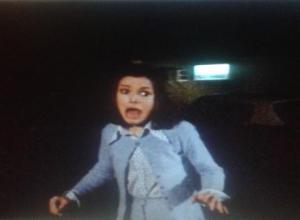
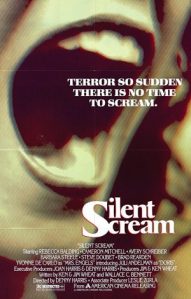 Set in a boarding house, this film is a pretty decent example of the derive-the-killer’s-identity plotline, the basic premise of which was repeated a few years later by
  When was the last time you saw a cinematic character killed by a rampaging elephant? Like, by strangling. Yeah, that’s what I thought. Wild Beasts is the kind of dubbed foreign flick that makes me wonder what the original dialogue was, although I’d be willing to bet not a whole lot of nuance is lost with translation yielding “She’s not crazy, she’s being chased by a cheetah!” and “What the hell is that! Elephants!” The production did a pretty good job with the scenes involving people being mauled by various wildlife, given obvious limitations. I’m glad I watched a murky VHS upload, however. That made the scenes featuring animal cruelty a bit easier to handle. The one in which a cat is ravaged by rats I could even believe was faked. Others, such as when lions and hyenas attack cattle and pigs inside a stockyard? No such luck. The film ends abruptly, without explaining how the zoo animals and a group of children – but apparently no one else – got dosed with PCP, despite wrapping up with a screenful of gibberish.
 Originally titled “Gnaw,” this indie flick had me wondering for much of its first hour or so if it was actually a parable about domestic violence. Whatever the case, the last 40-odd minutes took it into supernatural horror territory and were quite fraught with tension, although also quite evocative of The Babadook. That connection was only strengthened for this reviewer by its oddly casual, offbeat resolution, which interjects a cutesy element to the proceedings along with a tinge of humor. Indeed, after all the buildup, the way our heroine ultimately triumphs over the totemic manifestation of her adversities is completely anticlimactic – cleverly acknowledged onscreen by the character’s reaction. This production doesn’t seem quite sure how to blend its disparate elements; it also verges on clumsiness at times. Additionally, some of its generic characterizations seem little more than ciphers. Overall, though, I usually tend to champion efforts of this sort, which both show ambition and demonstrate a level of skill to match. A bit more deftness in future endeavors, and this director may really have something. A touch more originality wouldn’t hurt, either.
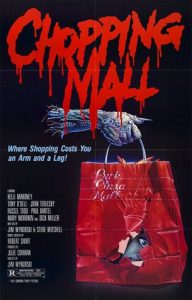 It’s a shame SPACE RATS has this capsule format, because the old me could’ve written thousands of words on the sociocultural implications of this classic. (The old me was a blast at parties.) That being said, it must be allowed that this is very nearly the perfect schlock horror creation. It’s a little too knowing, but it was produced by Julie Corman, husband of Roger, and if your producer’s last name is synonymous with the genre – having more or less invented it – that may be hard to avoid. To be clear, this isn’t really much of a “horror” picture, either, and the revamped title (it was initially called “Killbots” for theatrical release) is wildly misleading, as no “chopping” occurs. The rogue security robots, however, are a delightful mixture of Battlestar Galactica Cylons and the Stern Electronics arcade game Berzerk, and a clear precursor to elements soon to be seen in RoboCop as well. The acting is wooden at times, the dialogue obvious and stilted, the continuity questionable and the FX often hilarious, but when the day is saved by … explosive paint? Well, you’ve got a cult smash on your hands, and deservedly so.
  First off, this picture has the most swingin’ soundtrack you’re likely to hear for some time, vast amounts of fusion-era Miles Davis electrobop courtesy of composer Roberto Nicolosi. It also has pretty great examples of breathless, stentorian dubbing for the dialogue. (The title translates as “Eye in the Labyrinth,” if you’re wondering, but the version I watched didn’t bother with all that.) And I spent the early portion of the movie deciding to describe the heroine as “sylphlike,” before discovering at length that she’s not the heroine. Ergo, as is usual for a giallo, nothing much is coherent for most of this flick. Unusually for this type of film, however, eventually everything is explained, and even makes some sort of sense – at least in terms of the story being presented, that is, not in any identifiable reality. Unfortunately, it mostly translates into a mundane mystery. On occasion, it appears as though the cameraman (Giorgio Aureli? Maurizio Maggi?) loses control of his equipment.
 SPACE RATS From Outer Space