written & directed by scott reynolds
essential productions/the new zealand film commission
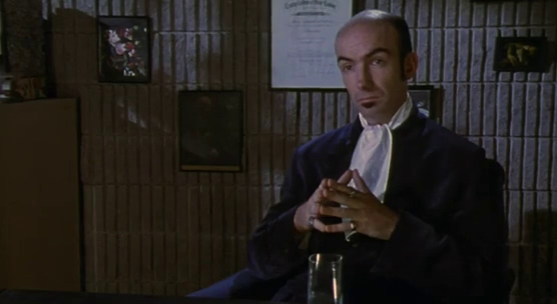
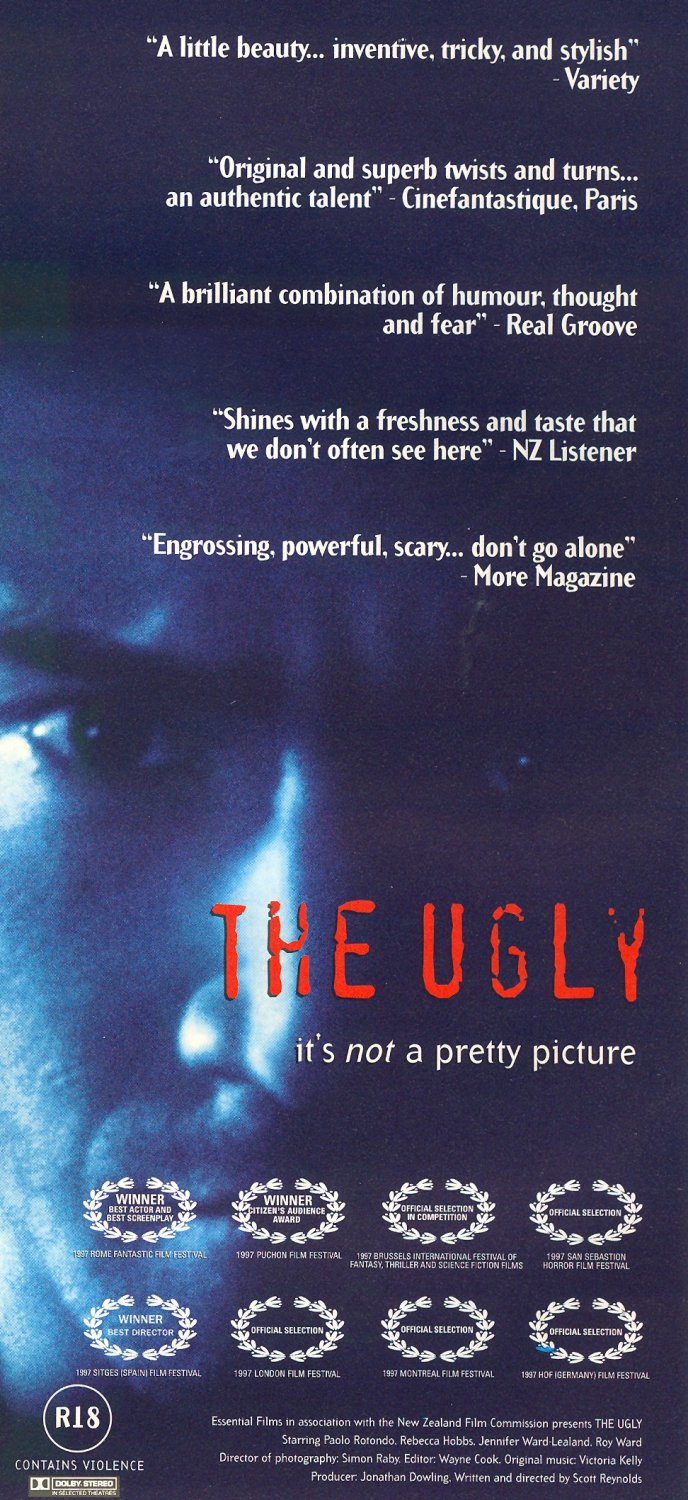 What a deft accomplishment this New Zealand production is. With a setting straight out of the mundane – serial killer in asylum, being interviewed by psychiatrist – this nifty little low-budget film never settles for the industry standard, a directive it follows all the way through to the end. Piecing together fragments of the story as it proceeds – symbolically represented by events in the story itself – the question becomes how much of the killer’s version one is expected to believe. With its effects largely confined to jarring cuts and hazy flashes, and much of its overt violence glimpsed therein, an enigmatic aura is created and sustained. Though as the film moves past its climax it begins to rely a little too much on what may perhaps be manifestations of the mind of the madman, enough quirks and curveballs are presented along the way to avert predictability. The final scene is no exception. Interpretations may vary.
why did i watch this movie?
1990s. Saw some reviews or blurbs that said it was a little offbeat, and affecting.

should you watch this movie?
Aficionados of little-known horror flicks should definitely search for this one. Really, those who are more than casual fans of the genre would most likely appreciate it.
highlight and low point
The unique presentation of the material stands out, because – again – this is well-trodden territory, but it never quite feels that way while on view. The characterizations are interesting and not straight from central casting, as it were. The filmmakers also do a credible job despite very apparent fiscal constraints. On the downside, at times some deliberately outré details seem too intentional, and a few issues the script didn’t intend to raise might rankle a bit.



 By which I might mean a Philip Glass score that we hear the same snippet of way too often. Oh, and vacuous voiceovers that aim for grandiosity only to land on ostentation.
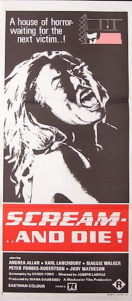 So many titles and so many threatening adverts for such a tepid plod whose only semblance of tension arises from the wait for occasional actress and future lad-mag model Andrea Allan to disrobe. Who’s the killer, you might wonder for an idle minute, correctly identifying the obvious attempts at misdirection, and also realizing that you don’t much care so long as you’re assured the picture will be ending. When it does reach that ending, full dark night abruptly shifts to very bright daytime. Clearly, the filmmakers wanted to get it over with, too. Perhaps this is why they don’t bother tying up any loose ends … such as letting us in on why our heroine got
 involved
  The second murder scene is pretty intense, I suppose, but by that point it isn’t even interesting enough to sustain one’s attention. Some of the leftover mod touches of a foundering Swinging London are amusing. A tangential subplot involving pigeons goes absolutely nowhere. Yes, pigeons.
 I’m sure it’s been noted before, but the attention to detail in this movie astounded me, such as the scene wherein Arbogast is looking for clues to Marion’s disappearance in the Bates Motel’s office parlor – where Norman is displaying his stuffed birds – and the bookshelf behind him holds a full set of books entitled The Art of Taxidermy. So it’s a bit surprising, I guess, that certain other important factors seem so transparent, or even dishonest. Of course, that’s nitpicking, and anyone who doesn’t think this is a high-quality cinematic achievement … probably doesn’t care for noir films or suspense, or pulp fiction. Hitchcock himself must have thought he had a goldmine here, however, as he went ahead and made it despite Paramount’s objections and refusal to budget it appropriately. That worked out all right.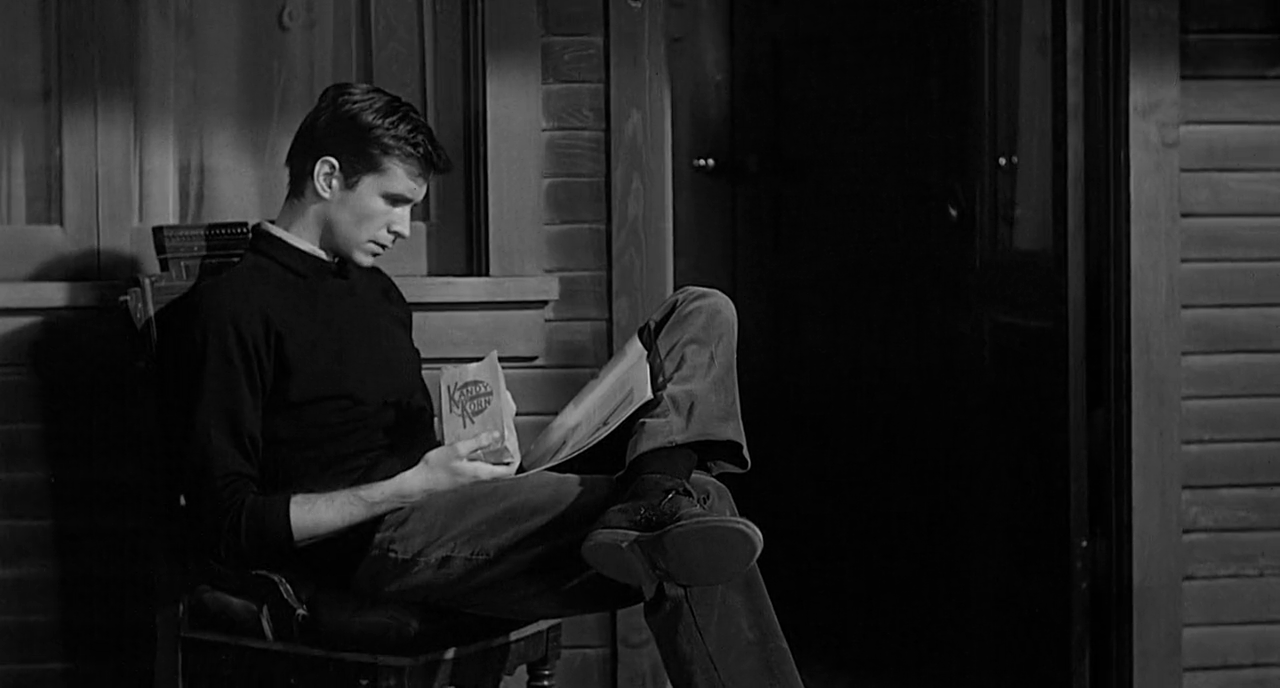
 Can I call this a disappointment if I watched it thinking it would be a scuzzy, nothing exploitation slasher with paper-thin intent and slapdash execution, but instead discovered a well-crafted picture of surprising depth and real pathos made with a skillful hand? Don’t answer that, it’s a rhetorical question. But despite a number of moments that could have turned this flick into a groaner, the poignant portrayal of the title character proves redemptive. Obviously inspired by the Son of Sam killings, with a handful of details provided by other notorious murder sprees, this film’s account of title psychopath Frank’s travails leavens its less credible portions with an intermittent awareness of his humanity. (How self-aware Frank is, however, remains an open question.) Lead actor and co-writer Joe Spinell’s creation is disturbingly credible, and in context, the more fantastic notions are not hindered by their implausibility.


 Well now, THIS is an unpleasant little flick. I mean, nothing in this picture is going to make a viewer feel very good, unless that viewer has got some serious issues. A few things may make the viewer laugh, sure, but this is a movie that is based around psychological problems brought about by severe child abuse, which it is suggested is itself a manifestation of psychological and/or emotional disability, and which itself is manifested in cruel, ugly, sadistic, misogynistic murder. (If you doubt that description, it involves a special room clad in stainless steel.) Oh, and extreme social dysfunction is added in just for kicks. On the upside, it’s got a disco theme underlying everything, and hallucinated ambulant corpses. Effectively dismal, better than I expected, and a reminder of how much I generally seem to enjoy films from this hopeless and beaten-down time period.
 as I thought Donny the murderous lunatic’s social awkwardness was portrayed brilliantly. In fact, I generally enjoyed Bobby’s presence throughout the proceedings,
 though I remain baffled by the fact that when he believes Donny is in danger, he fetches local parson Father Gerrity and not, you know, the police.
 I’m going to reference it again, so let’s just go ahead with a shout-out to Hanna-Barbera: They knew what they were doing when they produced Scooby-Doo, Where Are You? You see, when viewing productions such as this somewhat lethargic attempt at a murder mystery, tropes commonplace to those cartoons continually arise. Here, dashes of occult nonsense and some bitchin’ early ’80s Southern Cal touches are added to the template. A scare or two possibly may be found somewhere in this tale of (ominous pause) madness, but you’ll most likely be too busy laughing at some of the affectations – or more probably starting to doze off as the plot chugs along repetitiously. It could have worked, I suppose, but there just isn’t a whole lot to work with, to its detriment. Oh – hackneyed freeze-frame “surprise” at the ending. Woo-hoo.
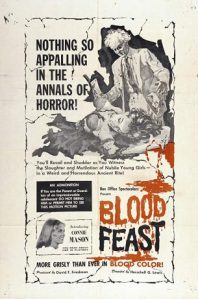 Here is where we should begin our disquisition on the ephemeral nature of what constitutes art vis-à-vis garbage, and engage in deep contemplation on the revealed substance and its relation to the Ideal, and how mere imitation or re-creation can only hope to further distance us from the knowledge of this state of perfection. We should, but we won’t, because gore impresario, auteur loon and marketing maven Herschell Gordon Lewis would probably laugh and point at us. His frankly ridiculous tale of catering a Society party with an “authentic Egyptian Feast” as a hopeful means of reviving the goddess Ishtar via cannibalism features some impossibly wooden acting, hilariously half-assed set dressing, excessively expository dialogue, indubitably fake blood, transparently ersatz makeup and FX, rudimentary cinematography, et cetera et cetera et cetera et cetera. (And in the midst of life we are in debt,
 SPACE RATS From Outer Space