“Written, produced, & directed by Greydon clark”
copyright © greydon clark productions, inc.
heritage entertainment
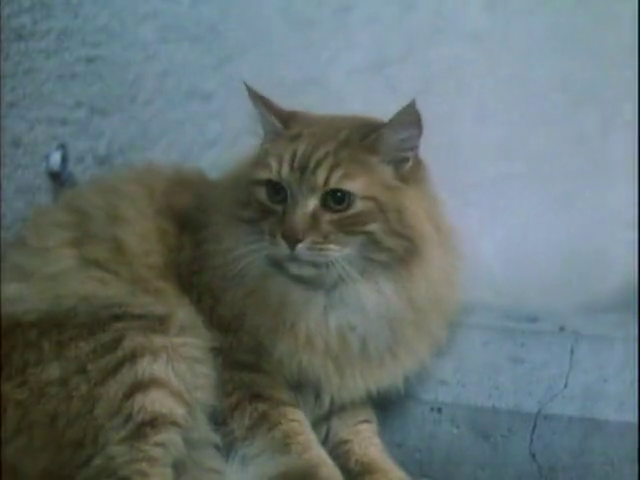
 About three-quarters of the way through this inestimable SF/horror hybrid it begins to seem it was forced into its final form via a harried editing process, because scenes come and go abruptly and transitions cease to matter. It’s also around this time that one begins to notice certain amusing facets of the production, such as the repetitious establishing shots and the obvious discrepancies between the dimensions of the yacht we are to understand the characters are aboard and those of the ship we actually see them aboard. And of course, there are the many, many, many images of the cat. The terrifying, deadly, seemingly ordinary tabby cat. Now, budgetary constraints obviously played some role in this tomfoolery, but that can’t explain everything. Whatever the reasons, this hokey straight-to-video picture could have been a whole lot m
 ore satisfying. It just never goes quite far enough in any particular direction – much like the malfunctioning vessel that becomes a virtual … DEATH SHIP.
 why did i watch this movie?
Without Warning was interesting enough, but I don’t think it led me here. There’s always the George Kennedy connection.
 should you watch this movie?

I’d like to say it’s good for laffs, but its unintentional humor can’t overcome the sense of tedium.
 highlight and low point
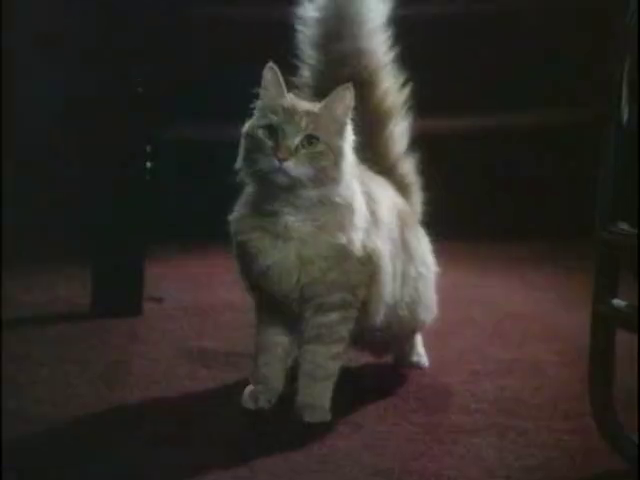
The overacted yet undersold deaths are priceless – as are the pics of the toy boat representing the seafaring watercraft – but I cannot overemphasize how many scenes in this film feature an  ordinary cat doing ordinary cat things. Now, I happen to love the furry little demons the human race unwisely invited to share their homes, but such cinematography is incongruous with the desire to create an atmosphere of ill portent.
rating from outer space: D+







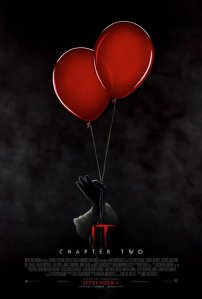 You may know that this picture hit theaters right about the time S. King’s latest bestselling novel, The Institute, hit bookstore shelves. I had been unaware of the new book until basically its release day, when I read it immediately. (Naturally.) And despite the fact that it lifts its basic premise almost entirely from season one of Stranger Things (and sure, that premise isn’t dissimilar to the one King presented in Firestarter, but he has been enjoying revisiting old themes of late), it’s a pretty good read. King slacks off a bit in the latter half, where character development gets a much shorter shrift than he ever would’ve cottoned to in his prime, and the ending wraps up a little too neatly, especially for a guy whose tendency to punt the ending is lampooned in the latest movie based on one of his works. (This one, that is.) But it’s better than The Outsider, and it’s better than Sleeping Beauties, and it’s better than the Bill Hodges trilogy, and it’s better than The Revival, and it’s less ridiculous than Dr. Sleep and … well, it’s not better than Joyland.













 SPACE RATS From Outer Space